
I always remember the day and the times. But the times seem more relevant recently.
I’m certainly a different person than I was as a 18-year-old just starting to college in the midst of a tumultuous time — the 1960s. Those years shaped some my beliefs as the result of political assassinations, wars with foreign nations, civil disobedience, race riots, and cultural upheaval of many sorts, including the gender and sexual revolutions.
There was a lot going on.
It felt like the world was turning on its top. Those who were traditionalists and wary of change saw the status quo as security and were angry with any efforts to disturb it. Those desperate to see things change, improve, come apart and be remolded saw the status quo as shackles that held back progress. This is the way it’s always been, and these periodic upheavals are merely the shifting of tectonic plates in the social substructure of human civilization. They can be minor and hardly noticed or they can be seismic in nature and we are forced to deal with the aftermath. The 60s and 70s — but specifically the 60s — were of such magnitude.
In some ways, the 1960s didn’t start for me until 1963, the year that I graduated from high school and enrolled in college.
In the very early afternoon of November 22, 1963, in that freshman year, I was sitting in a large lecture hall listening to our professor expound on the early development of American government. There was a knock on the classroom door. The door opened and a woman stepped in and motioned for the professor to come over to the door where she stood with a look of high concern on her face. She whispered something to the professor who stepped back, looked at her, said something, and they stood looking at each other for a moment. He thanked her, she left, and he returned to the lectern and began again.
After just a few minutes, he stopped and told the class he was cancelling the rest of the lecture and that he had been told by the woman at the door that President John F. Kennedy had been shot in Dallas, Texas. With that, he turned and left the room.
There was a collective gasp from all the students present. None of us knew what to do or say. We turned and looked at one another and then finally began gathering our things and leaving to find a radio or television with more information.
Outside, the whole campus seemed to be talking in low whispers and moving aimlessly. I went to my next class where I found a note on the door that that class had also been cancelled. I finally made my way to the Student Union where hundreds of other students were gathered around every television set they could find. I’ll never forget the image of CBS anchor correspondent Walter Cronkite looking into the camera and announcing that President Kennedy was dead from a gunshot wound while riding in a parade in Dallas. I remember Cronkite removing his thick black glasses and with tears in his eyes, saying again “the president is dead.”
Almost immediately after JFK was pronounced dead, there was the swearing-in business for the new president, Lyndon Baines Johnson. As he put his hand on the bible and raised his right hand to take the oath, Jackie Kennedy was standing at his side with her husband’s blood still on her suit and tears in her eyes.
It was much more than a poignant moment. It was a symbolic reminder that death cannot defeat the nation. It was a message to the world that America will grieve in its time, but first it will show the world that the murder of its president is not the murder of the nation.
We will carry on.
It is the equivalent to England’s declaration: “The King is dead. Long Live the King.” It is the visual symbol of a government’s and nation’s continuity. Of course, the country wasn’t going to be same under Johnson as it appeared it was going to be under Kennedy. Kennedy was young and made the nation feel young again. Johnson appeared to be of the old establishment. His determined commitment to the war in Vietnam didn’t help. And it took a beat for us to see that Johnson was much more progressive than we might have thought. Perhaps, Kennedy had already set the wheels of progress in motion enough and with enough energy from a generation that was determined to kick off the constraints of politics as they had been. Johnson in his term also became a symbol of a new time and place for America.
I think that was the beginning of the 60s for me. It was the dawning of what is universally labeled as a tumultuous decade in American history. The worst and deadliest year was 1968, the year that I graduated. America had been at war in Vietnam since 1960, and eight years into it, the conflict was growing. And since 1965, the U.S. had had 125,00 troops on the ground with casualties mounting in a war that an increasing number of Americans could find no reason for the country to stay engaged in.
For example, I remember my father telling me shortly after I had enrolled in college and knowing that I almost certainly would have been drafted if I had not joined the Naval Reserve and enrolled in college in 1963 that he was going to encourage me to go to Canada to avoid the draft. This from an arch conservative who had four sons serve in World War II. Looking back, his position was an example of how badly President Johnson had lost the support of the American people to continue waging a war in which they could not see what victory would look like.
I suspect Dad and Mom also thought they probably had run the table to get their four oldest sons home save and alive. Dad wasn’t prepared to push their luck with another son.
On April 4, 1968, Dr. Martin Luther King was shot and killed in Memphis, Tennessee, and just two months later, Robert F. Kennedy, who had declared his candidacy for president of the United States in March, was assassinated in Los Angeles. Civil disorder was the rule of the day; and there were gatherings, marches, and riots on a weekly basis.
Life was unsteady.
As I left the classrooms and began working in the public information office of the college in 1968, the future was simultaneously bright and dark. Those of us who had experienced the social, political and cultural upheaval of the 1960s were pressing ahead…but also looking over our shoulders at what might be sneaking up on us.
– – –
Even if I had been old enough to vote in 1960, I probably wouldn’t have voted for Kennedy. I was still under the political influence of my Dad, who believed that Democrats were the ones who had triggered the financial collapse that led to the Great Depression.
That collapse had been a disaster for him and his family largely because he was not even remotely prepared for it. He was a farmer and a laborer, and when the Great Depression crushed everyone limited to only the resources of a weekly paycheck, farmers and laborers were in economic free fall, looking for someone to blame.
Dad chose to blame Democrats.
I’m pretty sure he also believed they were responsible for the biblical Great Flood and the crucifixion of Jesus.
But in the nearly three years Kennedy was president, I began to see that he represented something that felt new and fresh in politics. In hindsight decades later, all of that wasn’t completely true. But the assassinations of the mid-60’s made me and many of my college friends wonder whether the American experiment in equality, democracy, and social mobility was falling apart.
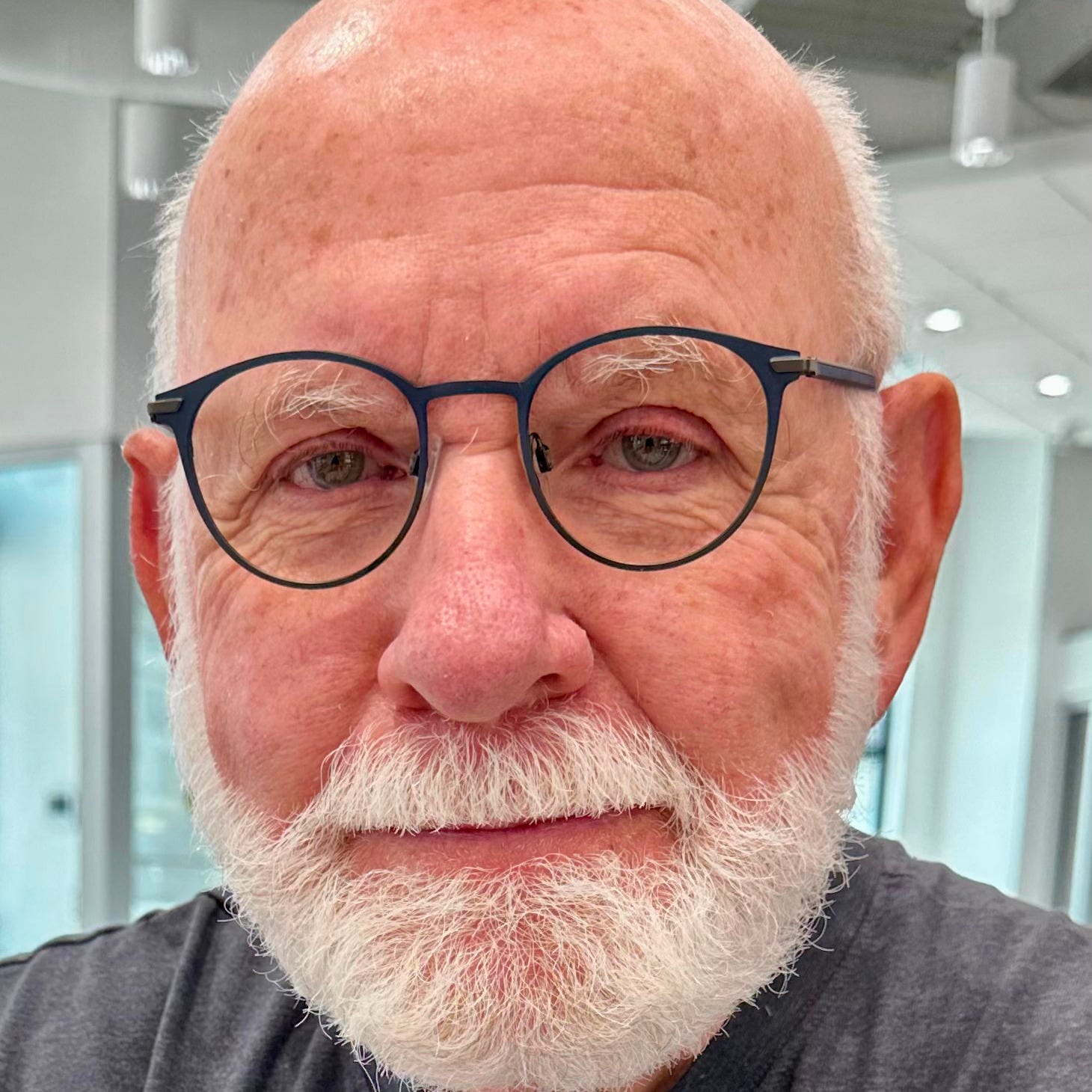
And now, once again, as I write this from the perspective of a newly minted octogenarian, observing the lean from all sides toward isolation, ostracism, and violence as the answer to both political and social conflict, I wonder if the American dream is dissolving.
History has a tendency to repeat itself, and I am keep hearing in my mind the words of the 60’s greatest songwriter and musical philosopher, Bob Dylan:, “The Times They are a Changin”.
Leave a Reply
You must be logged in to post a comment.